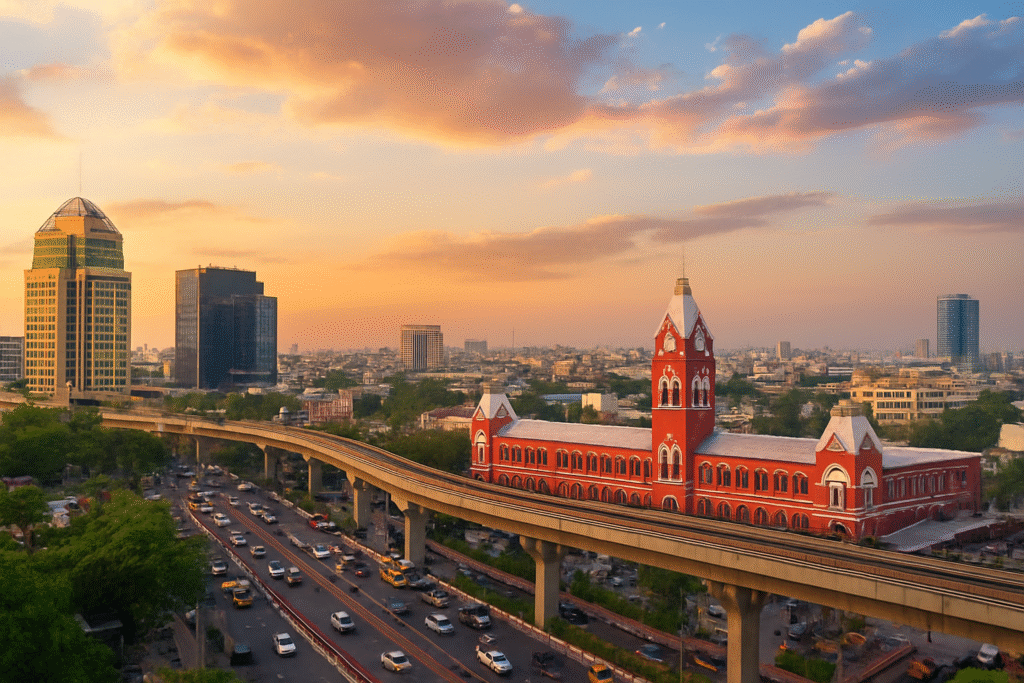
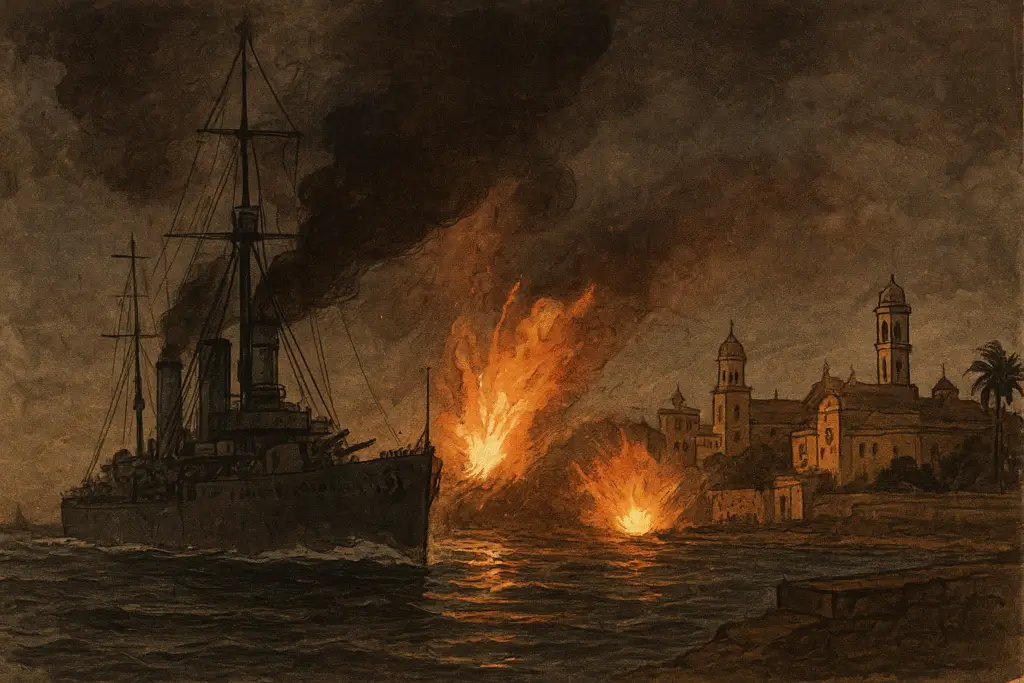
Most of us know Chennai as a bustling metro city today, famous for its IT corridors, cinema, beaches, and filter coffee. But over a century ago, in the early years of World War I, the then city of Madras witnessed a shocking event that is still remembered in history books – the night when the German warship SMS Emden fired shells at the city.
This incident not only shook the people of Madras but also left a mark on the collective memory of Chennai. Even today, if you explore certain parts of the city, you can find traces and stories about the “Emden attack.”
Setting the Stage: World War I Reaches Madras
World War I broke out in July 1914, and although India was under British control, the impact of the war was felt here too. German naval forces were looking for ways to weaken British trade and supplies across the Indian Ocean.
Among their fleet was the German light cruiser SMS Emden, commanded by Captain Karl von Müller. Known for its speed, surprise attacks, and clever maneuvers, the ship gained a reputation for being both daring and destructive. In fact, its name became so famous that the Tamil word “Emden” entered local slang to describe someone bold, tough, or fearless.
The Attack on Madras – Night of September 22, 1914
On the night of September 22, 1914, the calm coastal city of Madras was going about its usual routine. Suddenly, around 9:00 PM, flashes of light appeared offshore. At first, many residents thought it was fireworks or some kind of coastal drill. But within moments, the truth became terrifyingly clear – shells were being fired from the sea, and explosions rocked the harbor area.
The Emden had positioned itself in the waters just outside Madras port and began targeting key installations. The primary focus was the Burmah Oil Company’s fuel tanks near the harbor, which stored large quantities of kerosene and oil. The German navy wanted to cripple British fuel supplies in the region.
Within minutes, huge flames lit up the night sky as oil tanks caught fire, sending plumes of smoke rising high above the city. Panic spread among residents, who rushed out of their homes, unsure if a full-scale invasion was underway.
What Exactly Happened That Night?
- The Emden fired between 80 to 125 shells (records differ), many aimed at the oil tanks and port facilities.
- Two large oil tanks of the Burmah Oil Company were destroyed, causing massive fires that burned for days.
- Some shells landed in residential areas, but the damage to civilian homes was relatively minor.
- Historical accounts suggest that 5 to 6 people were killed, and about a dozen were injured.
- The attack lasted only about 30 minutes, after which the Emden quickly disappeared into the dark waters, avoiding British naval retaliation.
Shockwaves Through the City
For the people of Madras, the attack was completely unexpected. Until then, the city was considered relatively safe, far away from the European battlefields. But this single event changed everything.
- Fear and Panic: Many residents fled inland, worried about more attacks.
- Economic Impact: Businesses and traders grew cautious, as Madras was a key hub for shipping and trade in South India.
- Psychological Blow: The British colonial administration was embarrassed, as their inability to protect Madras showed the vulnerability of the empire.
The Legend of “Emden” in Chennai
The impact of the Emden attack went beyond physical destruction. It became part of local memory and language.
- In Tamil, the word “Emden” began to be used as slang for someone daring, aggressive, or no-nonsense. For decades, people in Chennai would describe a strict teacher, a tough policeman, or even a fearless person as an “Emden.”
- The attack also entered local folklore – older generations often narrated the story to children as a reminder of the night Madras came under fire.
Why Madras Was Targeted
Historians suggest that the choice of Madras as a target was strategic.
- Oil Storage: The Burmah Oil tanks were critical for British naval operations in the Indian Ocean.
- Symbolic Value: By attacking a major colonial city like Madras, the Germans wanted to send a message that the British Empire was not untouchable.
- Psychological Warfare: A sudden, daring attack created fear not just in Madras but across other coastal cities in India.
Aftermath of the Attack
The British quickly tried to cover up the scale of the attack, fearing loss of confidence among the local population. However, newspapers across the world reported on the incident, often praising the cunning of the German ship.
For the people of Madras, the incident remained a memory etched in time. In fact, some of the shell fragments from that night were preserved and displayed in museums and government buildings.
The Emden continued its raids across the Indian Ocean until it was finally destroyed by Australian forces in November 1914 near the Cocos Islands. But by then, its legend had already been sealed in Chennai’s history.
The Emden Legacy in Chennai
Even though more than a century has passed since the attack, Chennai still remembers the Emden episode in subtle ways:
- The Tamil slang “Emden” is still occasionally used, especially among older generations.
- History enthusiasts and heritage writers often revisit the story to highlight Chennai’s unique connection to World War I.
- For Chennaiites, it stands as a reminder that even a city far from Europe wasn’t untouched by the waves of global conflict.
Conclusion
The attack of the German warship Emden on Madras in 1914 is one of the most fascinating historic incidents connected to Chennai. It was short, sudden, and shocking – but its impact lasted for decades. From destroying oil tanks to influencing Tamil slang, the Emden left behind a legacy that still lingers in the city’s history.
Today, as we walk through Chennai’s modern skyline, with its IT parks and metro rails, it’s hard to imagine that over a hundred years ago, a foreign warship stood offshore and shelled the city. But that’s exactly what makes Chennai’s history so rich – it’s not just about temples and beaches, but also about the extraordinary moments when the city faced fire and emerged stronger.